
Criminal Cases in the Sumter County Courts
The criminal side of the South Carolina Circuit Court is the Court of General Sessions. In Sumter County it hears felonies and other serious matters in the Third Judicial Circuit. The Clerk of Court keeps the General Sessions docket and case file at 215 North Harvin Street. A visitor should ask for a “General Sessions criminal record,” since the same clerk also holds civil Common Pleas material. The Judicial Branch Sumter court directory lists the clerk at 803-436-2227.
Lower-level files can sit elsewhere. Sumter Magistrate Court keeps county summary criminal and traffic cases. Sumter, Mayesville, and Pinewood Municipal Courts retain ordinance and qualifying summary matters. Bond Court holds first-appearance and bond records. An online General Sessions result is therefore only one slice of Sumter County criminal court cases.
The official Sumter court directory also provides a clear view of the local court offices and their custodians.
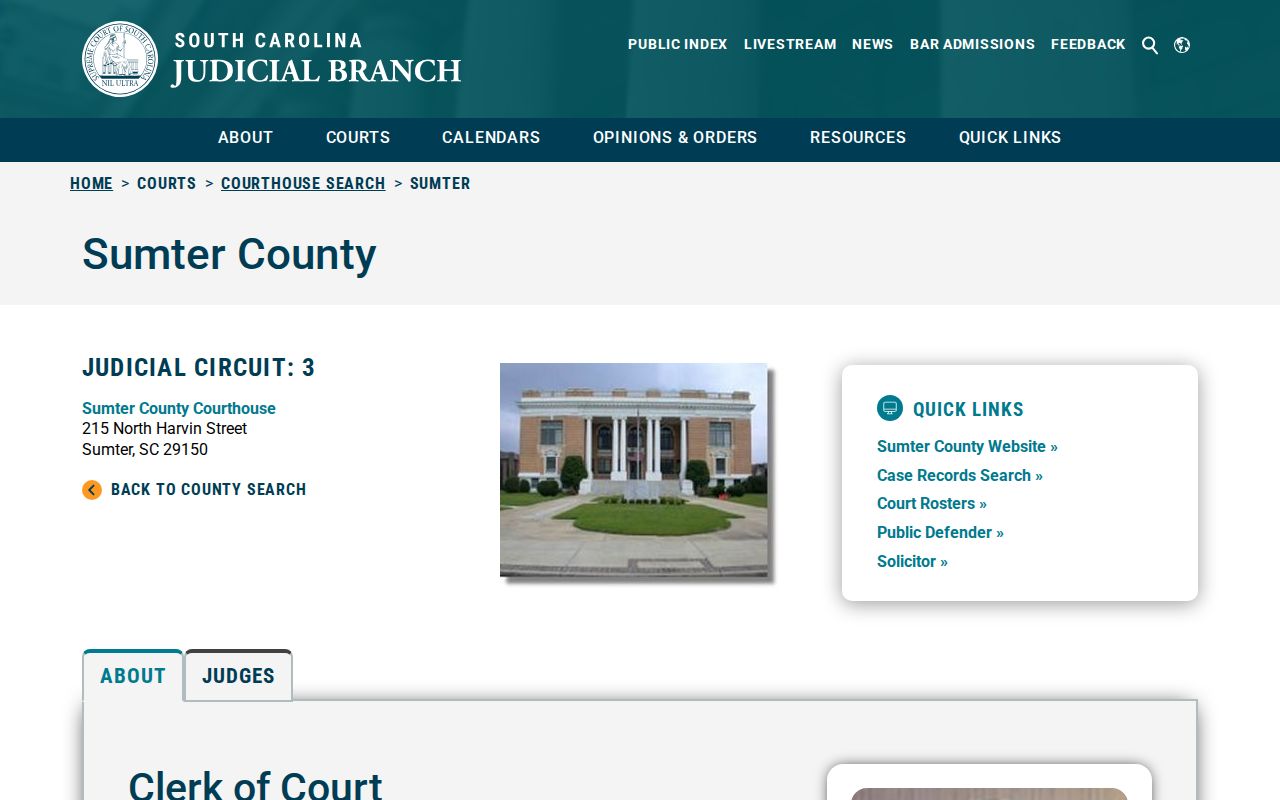
The directory helps separate the clerk, Bond Court, Magistrate Court, and municipal court contacts before a case request is sent.
Public Index by Sumter Court Agency
The South Carolina Judicial Branch Case Records Search opens county Public Index systems. The official Public Index search help explains the controls and court codes. Choose Sumter first. Then select the court agency that fits the event. General Sessions, Magistrate, Sumter Municipal, Mayesville Municipal, and Pinewood Municipal do not represent duplicate databases. Each choice points to a distinct docket custodian.
A party-name query is useful when the case number is unknown. Exact case numbers are stronger. Use a filing range and status filter to narrow common names, then open each plausible detail page. The overall status can hide different outcomes across counts. Read charge-level disposition and disposition date fields before drawing a conclusion.
| Field | Type | Required | Use in Sumter |
|---|---|---|---|
| County | Selector | Yes | Choose Sumter |
| Court Agency | Dropdown | Query-dependent | Select the correct court division or municipality |
| Case Number | Text | No | Use the exact identifier when known |
| Last and First Name | Text | Party search | Try accurate spellings and careful variants |
| Filed From and To | Date | No | Narrow the filing period |
| Case Type and Status | Dropdown | No | Limit results by available court options |
How to Search Case Records
Start online, but keep the clerk fallback in view. The Public Index is free and strong for discovery, not a promise that every pleading or signed order has an image. Prepare an exact name, likely court, filing period, and any case or citation number before searching Sumter County case records.
- Open the Judicial Branch case search, choose Sumter County, and select the likely court agency.
- Search by exact case number when available. Otherwise use surname, given name, and a useful filing range.
- Open each result and confirm the agency, case type, filing date, and party before relying on it.
- Read every count, event, hearing, bond, disposition, and sentence entry. Do not rely only on the overall status.
- Call the correct clerk for a certified disposition, sentencing sheet, indictment, older file, or document that lacks an online image.
General Sessions copies route to the Sumter County Clerk. Summary matters route to the court shown on the result. The official county fee schedule lists a transcript-of-judgment item, but it does not establish the price of every criminal copy. Ask the custodian for the current copy and certification cost.
Sumter Case Images and Clerk Copies
No downloadable PDF does not mean that no Sumter County criminal case file exists. Public Index metadata and document images have different coverage. A signed sentencing sheet, indictment, older pleading, or archived order may remain available only through the clerk. Give the clerk the exact court agency and case number, identify the paper needed, and state whether an ordinary or certified copy will serve the purpose.
The public defender is not a public-record custodian, but its official directory confirms the local defense office within the Judicial Center complex. The Sumter County public defender directory is useful when a party needs the official office contact rather than a court copy.
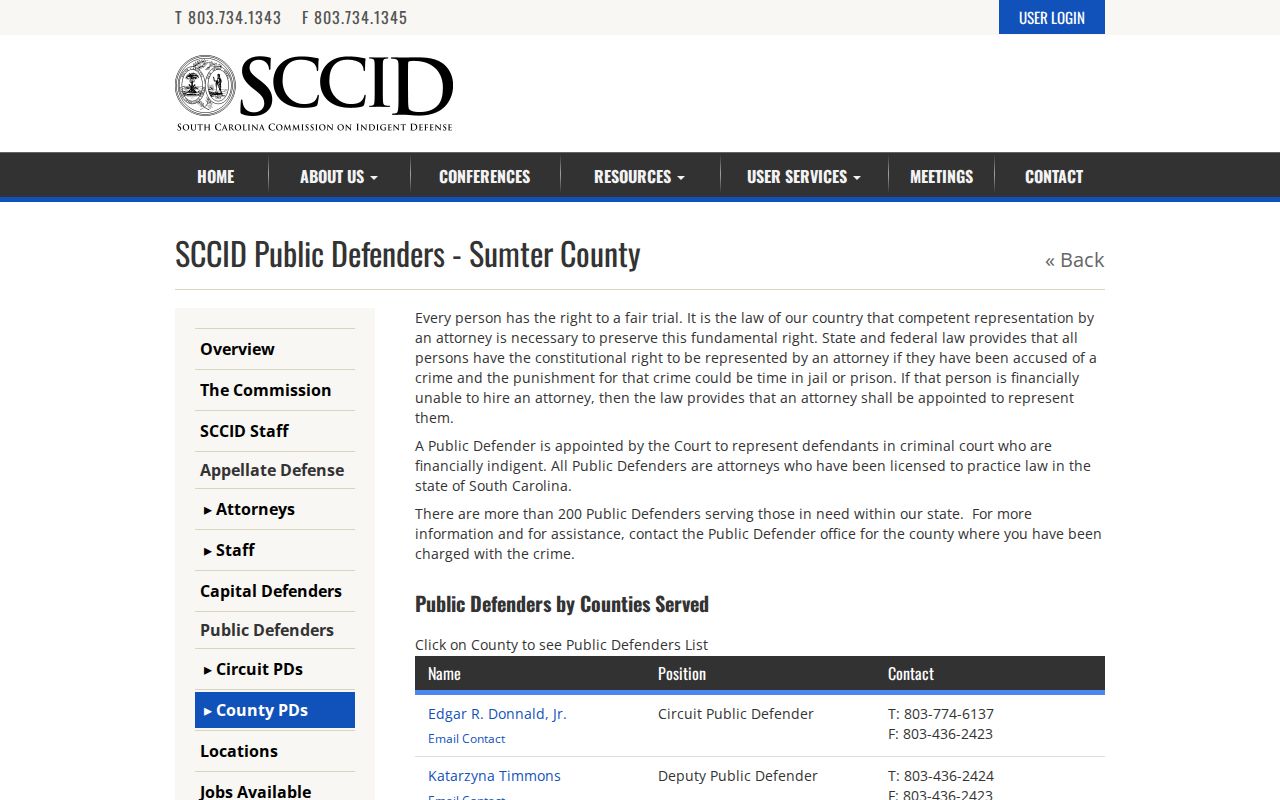
That office represents eligible defendants in assigned cases, while certified court records still come from the clerk who holds the docket.
Note: Ask about archived or counter-only papers when the Sumter County case detail shows an event but offers no image.
What the Case File Shows
A Sumter County court file is case-centered. It can show the prosecution as filed and how the court resolved it. That differs from the arresting agency report, which describes the event, and from the SLED criminal-history cycle, which joins fingerprint-supported arrests with reported outcomes. The most useful case fields are tied to the court and count.
| Case Number and Court | Identifies the docket and whether General Sessions, Magistrate, or a municipal court owns the file. |
|---|---|
| Charging Document | Shows the complaint, warrant, indictment, or other filed accusation where publicly available. |
| Docket Entries | Lists filings, bond actions, motions, continuances, pleas, trial events, and later orders. |
| Hearing Dates | Reports scheduled events, court rosters, and the judge where supplied. |
| Disposition and Judgment | Records the outcome of each count, such as conviction, acquittal, dismissal, or nolle prosequi. |
| Sentence and Conditions | Shows public sentence, assessment, restitution, or custody terms where the system provides them. |
Financial and bond fields may also appear. Images are limited by court practice, sealing, and redaction. A certified order from the clerk controls when portal text and the signed record differ.
Reading Sumter Criminal Case Outcomes
One case can contain several counts with different results. “Disposed” means the case reached an outcome, not that every count produced a conviction. A dismissal ends a charge without conviction on that count. A nolle prosequi is the prosecutor’s formal choice not to proceed at that time. An acquittal follows a not-guilty result. A conviction follows a guilty or accepted no-contest plea, or a guilty verdict.
- True bill
- The grand jury returned the indictment for General Sessions prosecution.
- No bill
- The grand jury declined to indict on the charge presented.
- Disposition
- The outcome assigned to a case or individual count.
- Nolle prosequi
- The prosecutor formally stopped pursuing that charge at that time.
Compare the original allegation, amended count, disposition date, and sentence. This count-level reading explains why a booking charge may not match the final Sumter County criminal case record.
Stages of a Criminal Case
A serious Sumter County prosecution may begin with arrest and bond proceedings, but the court file takes shape when charges are filed. Prosecutor screening can change the intake allegation before an indictment. Arraignment presents the formal charge and plea. Pretrial motions, rosters, continuances, a plea, or a trial follow. The docket then records disposition and any sentence.
Case flow: Charges Filed → Arraignment → Pretrial → Plea or Trial → Disposition → Sentencing
Summary cases take a shorter court route, yet the same core distinction holds. The arrest and booking happen before the court decides guilt. Hearing entries are schedules, not outcomes, and a portal date should be confirmed with the assigned Sumter County court.
Sumter Case Transfers and Federal Dockets
Jurisdiction can move a case away from the first expected docket. Under South Carolina Code §22-3-545, the solicitor may petition to transfer an eligible General Sessions matter to a summary court when the statutory limits and defendant agreement are met. This is why an apparent gap in one Sumter County criminal case search may require a second court-agency query. Federal charges are separate. Sumter County falls in the Columbia division of the U.S. District Court for South Carolina, and federal criminal case numbers use division code 3. The official federal case-number guide illustrates that format.
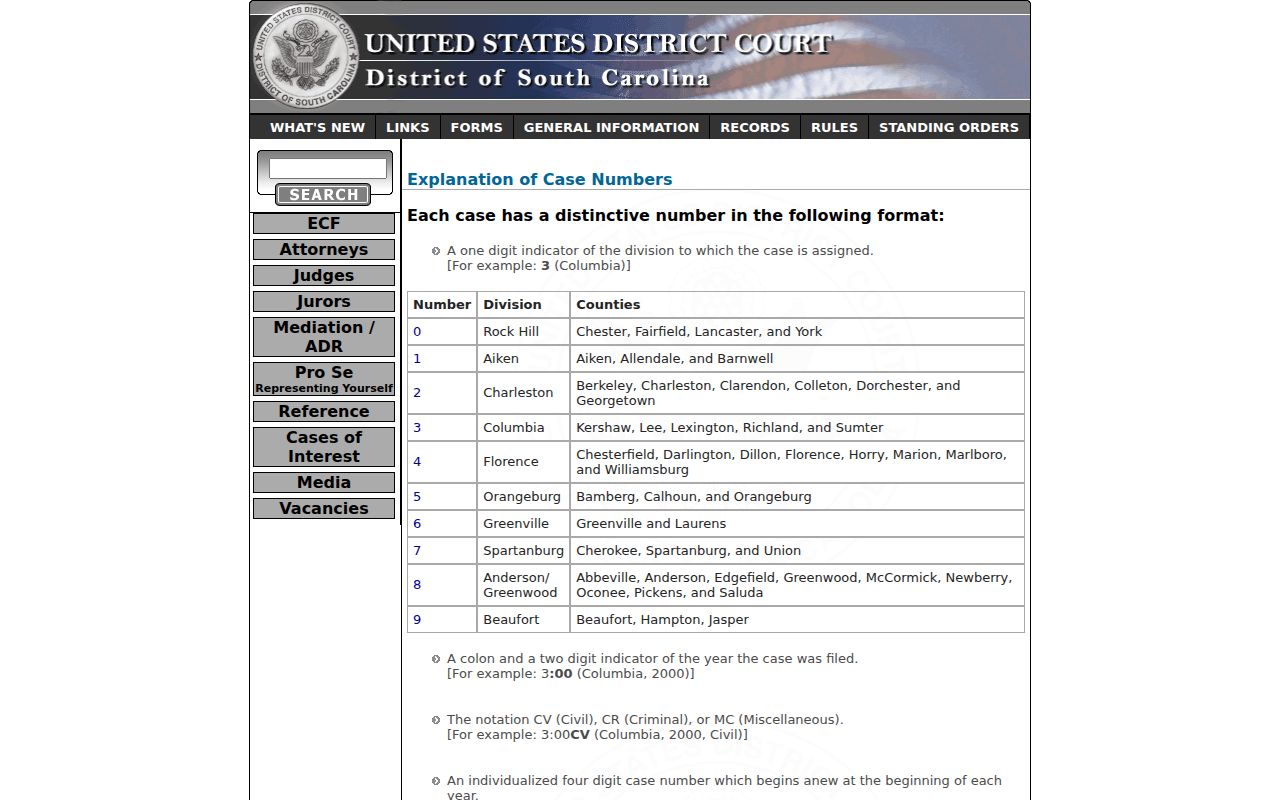
The division marker distinguishes a federal Columbia docket from a Sumter County Public Index case number.
Federal dockets use PACER, which requires registration and follows its current usage-fee schedule.
PACER is the official federal layer, not a replacement for the Sumter clerk or South Carolina Public Index.
Access & Restrictions
The South Carolina Freedom of Information Act supports inspection, copying, and electronic receipt of public records, subject to lawful exemptions and agency rules. Court access also reflects sealing orders and court rules. Juvenile files, expunged matters, protected victim details, and some active-investigation facts do not belong in an ordinary public result.
Rule 41.2 requires sensitive identifiers to be redacted from publicly available electronic court images. A paper or clerk-held file is not a way around a valid restriction. Ask for segregable public portions when a record contains both open and protected material. If a Sumter County criminal case does not appear, contact the exact court before assuming it never existed.
Correcting Sumter Case Record Gaps
Public Index and SLED CATCH answer different questions. The court index is a case docket. CATCH is a paid, name-and-date-of-birth search of South Carolina’s fingerprint-supported criminal-history repository. A disposition may appear at the Sumter County clerk before it matches the SLED arrest cycle. Names, aliases, dates of birth, missing fingerprints, and reporting delays can also create a mismatch.
For self-review, first obtain the correct Sumter County disposition and case number. Ask the clerk for a certified copy when accuracy matters. Then contact SLED Public Dissemination or the CCH unit with the supporting court record. Do not assume one screen overrides the other. The originating court corrects its case file, while SLED handles the repository entry.
A valid expungement can also remove an eligible matter from public access. General Sessions applications begin through the solicitor in the county of arrest; dismissed summary charges route to that specific magistrate or municipal court.